


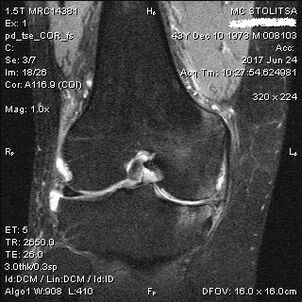
Arthritis of the knee, or arthropathy, dominates the incidence of joint disease.It is a chronic degenerative dystrophic disease that affects all parts of the joints.Cartilage begins to degenerate, and changes occur in the joint capsule, synovium, ligamentous apparatus, and adjacent bony structures.This disease has an additional name - arthroarthritis of the knee.
Symptoms of knee arthritis
They may be more or less obvious, completely depending on the stage.
The pain syndrome is barely noticeable in the early stages of the disease, but becomes more severe as the disease progresses.The first phase is characterized by leg fatigue and decreased joint mobility, usually occurring in the morning.
In the second stage of the knee joint, pain is accompanied by a crunching sound, along with limited movement and movement.
The clinical manifestations of the third stage are more serious - the pain does not disappear even at rest, severe deformation is obvious, and the joints lose function.Additionally, gait changes may occur.
Causes of knee arthritis
- Injuries of all kinds – fractures, sprains and torn ligaments, bruises, etc.;
- Excessive stress on the legs, most commonly seen in professional athletes and people who are forced to stand for long periods of time during the workday;
- Various metabolic disorders that lead to salt deposition in the joint cavity;
- Previous surgery to remove the meniscus;
- Various degrees of overweight and obesity, which place excessive pressure on the legs;
- Inflammatory process of joint tissue - various types of arthritis.
Diagnosis and treatment of knee arthritis
Diagnosis of knee arthritis is made in the office of a rheumatologist or orthopedic surgeon.The doctor examines and palpates the affected joints, listens to complaints, and asks other questions.Perform multiple tests - for example, asking the patient to bend their legs or take a few steps.He will then refer you for further studies if the stage of the disease or the nature of the pathological changes needs to be clarified.For example, for computed tomography or radiography.
Treatment for knee arthritis is often complex and aims to eliminate pain and restore cartilage, ligaments and joint function.
To relieve pain, anti-inflammatory medications, ointments, and topical liniments may be used.Protects joint tissue - cartilage protectant.Hormone medications are sometimes prescribed.
Physical therapy procedures and therapeutic exercises designed to activate blood circulation in the joint area and strengthen surrounding muscles are effective.
If the changes are irreversible, surgical treatment—revision—is needed.
Prevent knee arthritis
- Eat correctly: The diet should contain enough trace elements, protein and vitamins;
- Avoid excessive load on the knee joint and its traumatic lesions;
- Maintain an active and healthy lifestyle and quit bad habits;
- Prompt treatment of all diseases and pathologies that may cause joint disease;
- Control weight and prevent obesity.